
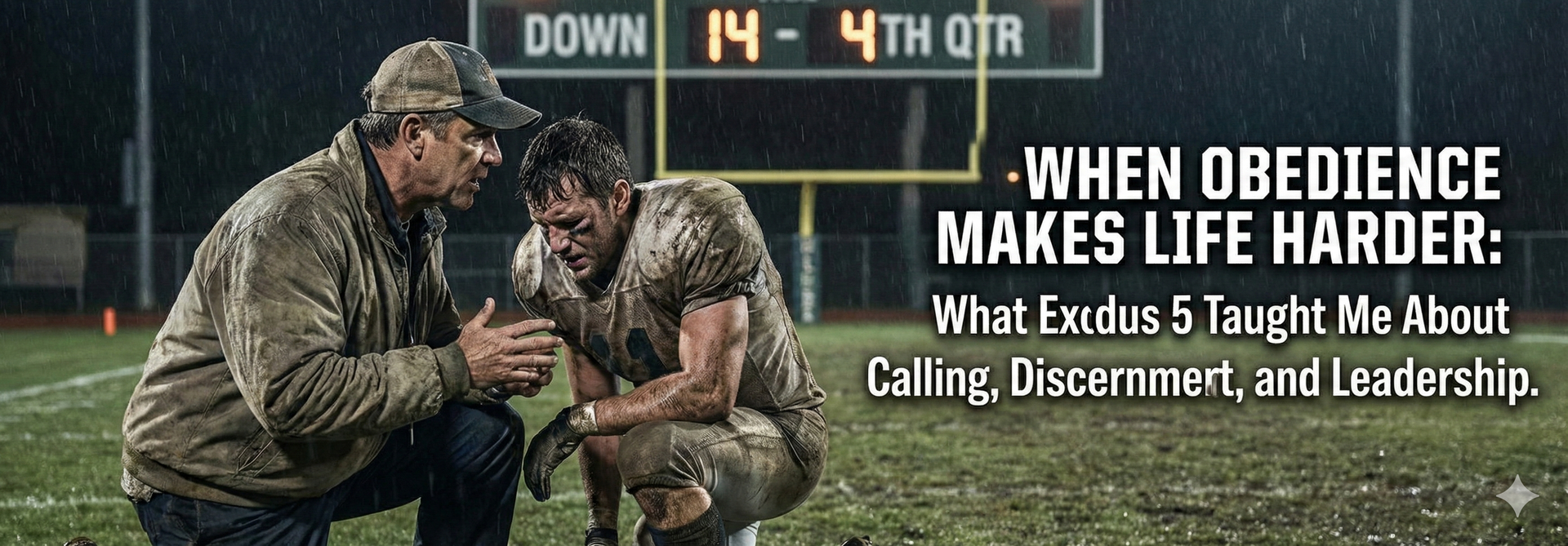
When Obedience Makes Life Harder

Scot Small

 What Exodus 5 Taught Me About Calling, Discernment, and Leadership
Exodus 5 is one of those chapters you can read a hundred times and suddenly see something new because you’ve lived it. Moses obeys God. He marches into Pharaoh’s court. He delivers the message exactly the way God told him to.


And instead of the situation improving, everything collapses. Pharaoh punishes the people. The people blame Moses.


And Moses turns around and says to God, in pure honesty:

“Lord, why have You brought harm to this people? Why did You ever send me? Ever since I came to Pharaoh to speak in Your name, he has done harm to this people, and You have not delivered Your people at all.” Exodus 5:22–23


It’s raw. It’s frustrated. It’s very human. And honestly? It sounds like most of us in leadership at one point or another.


But here’s the part that always grabs me: God already told Moses this would happen.


Back in Exodus 3 and 4, God said:


  • Pharaoh’s heart will be hardened
  • He will not let you go at first
  • This will take multiple confrontations


Moses didn’t misunderstand the instructions. He didn’t forget the plan. He didn’t need a theological refresher. He just wasn’t emotionally prepared for obedience to backfire.


Chuck Swindoll once wrote, “Moses wasn’t doubting God’s word. He was discovering the cost of following it.”


And that’s exactly what’s happening here.


Hearing God’s will is one thing. Living through it is another.


Moses expected spiritual fireworks… and instead he got political fallout.

He expected resistance… but not rejection from his own people.

He expected God to move… and instead God let things get worse first.


This is the moment where calling collides with reality. And every leader eventually lives this moment.


Why didn’t Moses remind the people of God’s plan? This always bothered me too.


Moses never says,

“Don’t panic. God told me this would happen. It’s part of the plan.”


Instead, he stands there taking all the heat.


Here’s why:


1. God didn’t tell Moses to explain that part to the people.
     God gave Moses specific talking points:


  • God hears
  • God sees
  • God will deliver
  • Go with the elders to Pharaoh


But God never said, “Tell Israel the process will be slow and painful at first.” So Moses wasn’t hiding anything.


He was simply obedient to what God actually told him to communicate.


2. Israel lacked the emotional capacity for the “long game.”

These were crushed, exhausted, traumatized slaves.

“Hey everyone, this will get worse before it gets better” wasn’t going to help them.


Leadership often requires carrying the parts God shows you that others aren’t ready to hear. God gives leaders portions of the plan the people aren’t ready to carry yet.

  • That’s leadership.
  • That’s weight.
  • That’s why Moses stands alone here.


So why does the Bible never mention Moses “remembering” God’s warning?


Because the point is not mental recall. The point is spiritual formation.


This moment shapes Moses in three ways:


1. God teaches Moses that obedience does not guarantee smooth results.


Tozer said,


“It is doubtful God can use a man greatly until He has hurt him deeply.”


This is Moses’ hurt.


2. God teaches Israel that salvation belongs to Him, not Moses.


If Pharaoh said yes on attempt one, Israel would follow Moses, not the Lord.

God isn’t building a hero. He’s building dependence.


3. God ensures deliverance will be unmistakably supernatural.


Human effort won’t get the credit.

The story must end with, “The Lord brought us out,” not, “Moses finally figured it out.”


This moment exposes what’s in Moses and what’s in Israel. God is preparing both.


Where this hits home for us. This isn’t just Moses’ story. It’s ours.


And honestly?

It’s the story of almost every prospective FCA staff member who steps into their calling.


The Prospective Staff Roadblock


I’ve watched this same pattern unfold in our ministry more times than I can count.


A prospective staff member discerns their call.

  • They pray.
  • They listen.
  • They get confirmation from people who love them and hear from God.
  • It all lines up beautifully.


Everyone is excited. We’re excited.

It feels like God is moving a chess piece into its spot.


Then they step onto the donor ministry journey.

They start sharing the vision.

They ask people to join them financially or prayerfully.

They’re full of faith… just like Moses walking into Pharaoh’s court.


But instead of excitement, they get hesitation.

Instead of support, they get “not right now.”

People ghost them. People dodge the question.

People admire the calling but won’t join the mission.


They talk to 10 or 15 people — and no one partners.


And the same questions Moses asked start flooding their mind:


“Lord, did I hear You right?”

“If You called me to this, why is it so hard?”

“Why is obedience making everything worse?”


And it’s not just them wrestling.

It’s us too — the leaders who have prayed for years for staff to fill these roles.

“God, everything aligned. It was confirmed in every direction. So why is nothing moving?”


And here’s the truth that every prospective staff member eventually discovers:


  • Every calling comes with a Pharaoh.
  • Every assignment comes with resistance.
  • And every leader faces a moment where obedience feels like failure.


This roadblock hits early for some, late for others, and smack in the middle for many. It’s not proof they misheard God. It’s proof God is forming them.


The Leadership Lesson


Exodus 5 shows us something we all need to remember:


You can be exactly where God wants you… and still feel like everything is falling apart.


Obedience doesn’t guarantee applause. Sometimes it guarantees pressure.

But pressure doesn’t mean you’re wrong. Pressure means you’re being shaped.


You’re being prepared for the weight of the assignment, not punished for saying yes to it.


Moses needed to learn to lead under blame, disappointment, and confusion.

Prospective staff need to learn to stand when their calling isn’t being validated yet.

Leaders in business, coaching, ministry, and family need to learn the same thing:


God’s promise and God’s timing rarely arrive together.

Faith lives in the gap between the two.


And that gap is where God forges leaders.


If you’re in that gap right now…


  • You’re not forgotten.
  • You’re not off course.
  • You’re not disqualified.
  • You’re not alone.


Sometimes things getting harder is the confirmation — not the contradiction — that God is moving.


But let me offer a few practical steps if you’re feeling the weight of your own Exodus 5:


1. Go to God with honesty, not performance.


Moses didn’t pretend. He didn’t pray polite.

He brought his frustration to God, not away from Him.

Do that. Say the real thing, not the cleaned-up version.


2. Remember what God did say, not what you assumed He said.


Moses wasn’t wrong — he just expected the deliverance to be immediate.

Check your expectations. Go back to what God actually promised you.


3. Don’t interpret resistance as rejection.


Sometimes the pushback is proof you’re standing in the right place.

Pharaoh’s “no” wasn’t the end. It was the beginning.


4. Bring a trusted person into the struggle.


Don’t wrestle alone. Sometimes you need someone to help you see where God is working when your emotions are too loud to notice.


5. Keep stepping in the direction God last confirmed.


When you’re confused, go back to the last clear instruction.

That’s where you stand until God speaks again.


A final thought for leaders, coaches, and prospective FCA staff


If you’re walking through a season where obedience is making life harder, don’t let the weight fool you. This is not the moment to back away.


This is the moment God is doing His quiet work — the deep work — inside you.


  • He’s forming courage.
  • He’s forming perseverance.
  • He’s forming trust.
  • He’s forming leadership that can withstand real pressure.


And just like with Moses, the story doesn’t end in Exodus 5.

The breakthrough comes. The deliverance comes.


The “God did this” moment comes — in a way that gives Him all the glory and grows you into the leader He’s shaping you to be.


  • So stay faithful.
  • Stay steady.
  • Stay honest before the Lord.
  • And keep walking in the direction He called you.


You might not see it yet, but the pressure you’re feeling might be the very evidence that God is preparing something far bigger than you imagined.

Leadership Communication - Scot Small
By Scot Small December 2, 2025
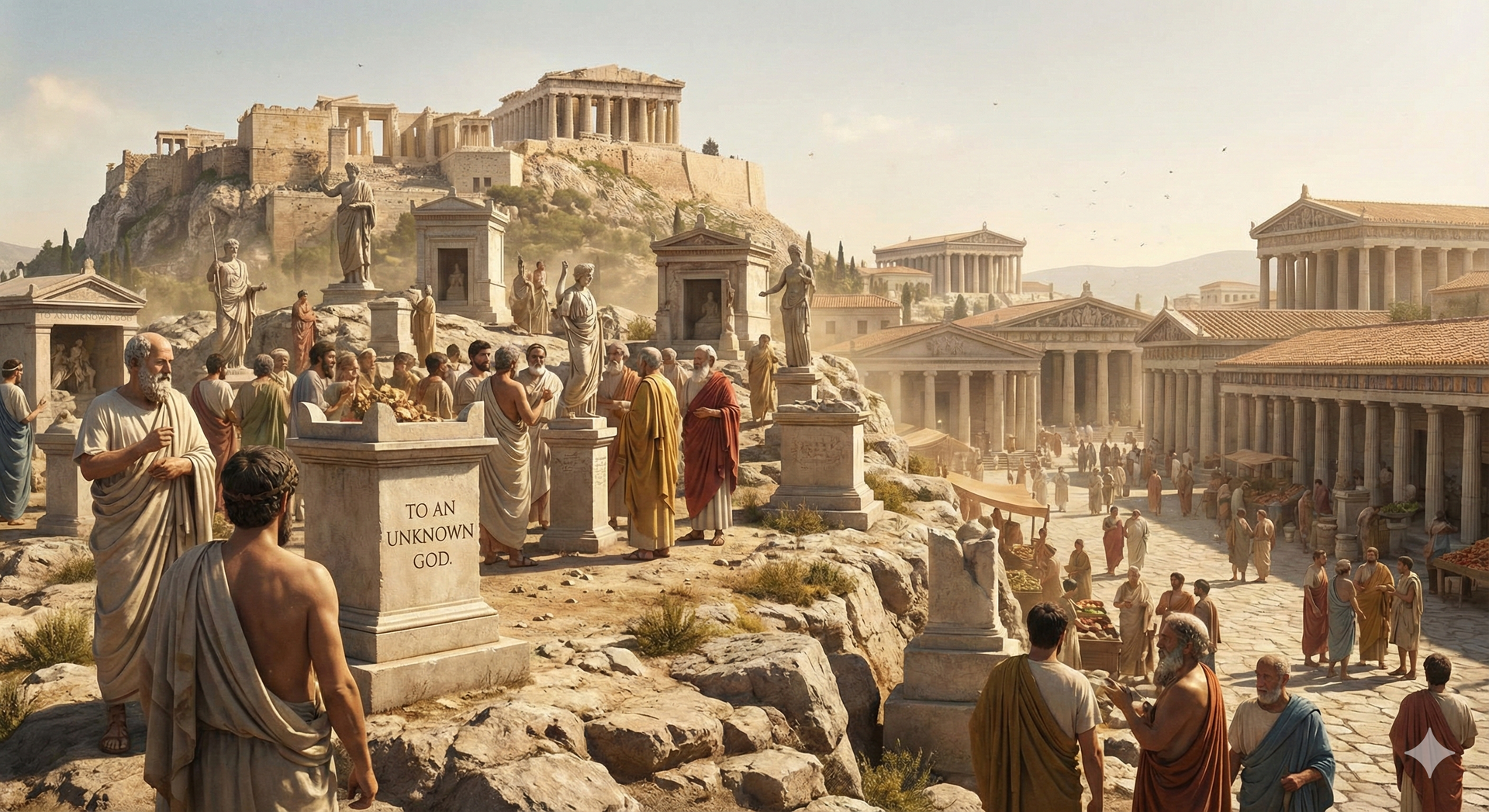
Leadership Lessons From Acts 17: Why Great Leaders Start Where People Actually Are
The Quiet Danger Every Leader Faces by Scot Small, Battlefield FCA Director
By Scot Small November 24, 2025
I’ve drifted in almost every area of life at some point. Ministry, marriage, parenting, leadership, spiritual health, mental focus. You name it. None of the drift happened overnight. It never started with rebellion. It wasn’t because I didn’t care. It wasn’t even because I was running from God.
By Scot Small September 11, 2025
This week at Fauquier High School,
Scot Small Leadership
By Scot Small September 2, 2025
It’s been more than twenty years, but I still remember it vividly.
By Scot Small August 27, 2025
When most people hear the word “leadership,” they picture someone standing at the front of the room, giving orders, or holding the spotlight. But here’s the truth: leadership is not about you. It’s not about the position, the title, or the perks. Leadership is selflessness. Why this is hard Everything around us says the opposite. The world teaches us to climb the ladder, build our brand, make it all about “me.” We scroll social media and it screams louder: “Promote yourself. Get noticed. Show off your wins.” And yet - look around. People are hungry for leaders who actually care. Not leaders who want something from them, but leaders who want something for them. Selfless leadership looks like this: Giving up your seat so someone else can sit. Listening when you’d rather talk. Putting your people in the spotlight instead of grabbing it for yourself. It’s not glamorous. Sometimes it’s even painful. But it’s real. The leaders who stick with us Think back on the leaders who changed you. Maybe it was a coach, a teacher, a boss, a parent. The ones who left a mark weren’t the ones shouting or demanding recognition. They were the ones who made you feel like you mattered. I’ve had leaders in my life who picked me up when I didn’t believe in myself. And I’ve also had leaders who made everything about them. Guess which ones I still want to follow? Exactly. Selflessness in action Selfless leadership means three things to me: Selflessness means sacrifice.John Maxwell says, “A leader must give up to go up.” That’s true. The higher you go in leadership, the less it’s about you. You give up your comfort, your time, sometimes even your recognition. You may never get the credit, but you’re okay with that because your people win. Selflessness means serving. People are not here to make your dream happen. You’re here to help them become who they’re meant to be. The best leaders I know are servants. They don’t see people as tools for success — they see people as the success. Selflessness means seeing beyond yourself. Leaders who only think about their own image might win for a moment, but they don’t last. Legacy belongs to those who invest in others. The tension we all feel Now, let me be real: this is hard. Everything in me wants to look out for myself first. I fail at this plenty. I can drift into self-protection, self-promotion, self-preservation. But when I’m at my best, I’m looking outward. Because leadership is not about getting ahead. It’s about bringing others with you. A biblical picture Philippians 2:3-4 says it clearly: “Do nothing out of selfish ambition or vain conceit. Rather, in humility value others above yourselves, not looking to your own interests but each of you to the interests of the others.” That’s leadership. Jesus Himself modeled it. The Son of God washed the feet of His disciples. He gave His life for others. That’s the ultimate picture of leadership — selfless sacrifice. The challenge for us So here’s the question: who are you lifting up today? It’s not about you. It’s about the people you influence. It’s about the teammate who needs encouragement, the employee who needs a chance, the kid who needs someone to believe in them. The world has enough bosses. What it needs are leaders who walk into every room not asking “What can I get?” but “What can I give?” That’s when people follow. That’s when trust is built. That’s when lives change. Because leadership — real leadership — is selflessness.
By Scot Small August 26, 2025
Yesterday, I had the opportunity to spend time with the Fauquier High School football team, talking about one of the most important qualities for both athletes and men: having a strong moral foundation. It’s easy to think about football in terms of strength, speed, and skill. But when life gets tough, it’s not talent that keeps you standing — it’s the foundation you’ve built. Without it, storms will knock you off balance. With it, you stay grounded no matter what comes. We talked about three key traits that make up a strong foundation: Integrity, Courage, and Faithfulness. Integrity is about standing firm, not bending when it’s easier to cut corners. Courage is choosing to do what’s right even when it costs you. Faithfulness is showing up, keeping your word, and staying the course. To bring this lesson to life, we ran a challenge on the field. Players formed tight huddles around a football, shoulder-to-shoulder, protecting what was inside. Team captains tried to break through and get the ball. What happened next was powerful. One group lost the football quickly, but instead of quitting, they asked to try again. They huddled up, talked about what went wrong, and came back stronger. Another group held firm and didn’t let the captains break through at all. Both groups showed growth. After the drill, I handed it to the leadership team. Captains pulled aside 3–4 players each and led a debrief with three questions: What made us strong? What broke us down? What did we learn? When they came back together and shared, the theme was clear: how they communicated in the storm determined the strength of their foundation. That insight didn’t come from me — it came from the players themselves. And that’s the kind of ownership you want to see in a team. They held their integrity, displayed courage against bigger, faster opponents, and stayed faithful to protecting what mattered most. That’s what it means to hold the line. That’s the kind of foundation every athlete, and every man, needs: integrity that doesn’t bend, courage that doesn’t back down, and faithfulness that doesn’t quit. Bonus Section for Believers: The True Foundation What we practiced yesterday with integrity, courage, and faithfulness points to something even greater. In life, we can try to build strong character, but if our ultimate foundation is shaky, we’ll still collapse when the storms of life hit. Jesus said in Matthew 7:24–25 that the wise man builds his house on the rock. The storms beat against it, but it stands firm because of its foundation. In the same way, 1 Corinthians 3:11 tells us that no foundation can be laid other than Jesus Christ. He is the cornerstone (Ephesians 2:20–21), the solid rock who will not shift under pressure. Isaiah 28:16 promises that whoever trusts in Him will never be shaken. That means integrity, courage, and faithfulness are not just good traits — they are reflections of Jesus Himself. He is perfectly faithful, He never compromises, and He displayed ultimate courage when He went to the cross for us. When we root our lives in Him, storms will still come — but we won’t be swept away.
By Scot Small June 20, 2025
Here’s something I wish someone told me sooner: Fear doesn’t disappear just because you believe in Jesus. Sometimes the most courageous thing you can do is stop pretending you're fine. I spent years managing an image. I wanted to be seen as the guy who had it all together - in business, in ministry, in family. But under the surface? I was often exhausted, insecure, and wondering if I was enough. The turning point wasn’t dramatic. It was me, in a quiet moment, realizing I was tired of performing and polishing. I just wanted to be honest. The moment I let myself say things like: "I don't know." "I'm struggling." "I need help." Something broke loose. Authenticity is scary, but it's where freedom starts. You can’t lead people while hiding from them. You can’t grow if you're protecting your mask. You can’t disciple others if you're afraid to go first. Jesus didn’t fake it. He wept. He got tired. He prayed with agony. And He showed us the way. If you feel afraid to be real - you’re not weak. You’re right on the edge of breakthrough.  "But we have this treasure in jars of clay to show that this all-surpassing power is from God and not from us." (2 Cor. 4:7) Courage isn’t loud. Sometimes it sounds like a whisper: "Here I am. All of me."
By Scot Small June 19, 2025
Leadership isn't about getting to the top. It's about kneeling to serve where no one else wants to. One of the greatest leadership lessons I ever learned didn’t come from a business book. It came from a towel. Jesus, on the night He was betrayed, did something none of His disciples saw coming: He grabbed a towel and washed their feet. In a moment when He could have pulled rank... When He had every right to demand loyalty... When fear and pressure were thick in the air... He knelt. That kind of leadership wrecked me in the best way. Because for years, I thought leadership meant drive, direction, big vision, clear plans. And those matter. But Jesus redefined it: "If anyone wants to be first, he must be last and servant of all." (Mark 9:35) If you're leading anything - a ministry, a team, a staff, a business - ask yourself this: Am I serving first? Or am I leading to be seen? I’ve seen leaders chase influence and burn out. I’ve also seen the ones who wash feet. They last. They multiply. They raise up leaders who serve, not shine. The older I get, the more I realize: Real leadership looks like sweat, listening, showing up when it’s inconvenient, and letting someone else go first. That's the kind of leadership that changes people. It changed me. Here’s how you can serve first: · Volunteer with Battlefield FCA – Help us disciple the next generation. · Become a Monthly Supporter – Fuel the mission that’s changing lives. · Pray with us – Identity in Christ is spiritual warfare. We need covering.
By Scot Small June 18, 2025
🎣 Ever get caught drifting without realizing it? It happens fast — in fishing and in leadership. Here's why Battlefield FCA is paddling with intentionality every single day...
By Scot Small June 17, 2025
I've been hearing a phrase a lot lately: "I'm at capacity." And I get it. Life is full. Between work, family, ministry, sports, and just trying to keep your head above water, there are days when it feels like you're stretched to the limit. But here’s what’s been stirring in me: I don’t think this phrase is helping us. Especially not in ministry. Especially not in something like FCA, where we’re called to give our lives to the mission of reaching every coach and athlete with the Gospel of Jesus Christ. When did we start believing that our capacity is the ceiling of our calling? Sure, we are human. We have limits. We need sleep. We need rest. Jesus Himself modeled that. But if we stop there, we’re missing something huge. Scripture never calls us to stay within the bounds of our comfort or capacity. It calls us to surrender. To sacrifice. To pour it all out for the sake of Christ. Let me be clear - this isn’t a guilt trip. And it’s not coming from someone who’s figured it out. I wrestle with this too. I’ve said, “I’m at capacity.” I’ve pulled back when I felt stretched. I’ve chosen convenience over calling more times than I’d like to admit. But what the Lord keeps showing me is that my threshold isn't the measure - His presence is . Christ Is Our Capacity Paul gives us a powerful example in Colossians 1:29: “I labor for this, striving with his strength that works powerfully in me.” Paul’s calling was enormous: spreading the Gospel, planting churches, suffering deeply along the way. But he didn’t lean on his own ability. He pressed forward not because he had the energy, but because Christ's strength was powerfully working within him. This is not about ignoring healthy rhythms of rest - it’s about where we turn when we're called beyond what we think we can handle. The call to serve and lead in ministry - whether it's leading a Huddle, coaching a team, hosting a Bible study, or just showing up to love people consistently - isn't supposed to be convenient. It's supposed to be Spirit - empowered. Jesus said, “Apart from me you can do nothing” (John 15:5). So, when we say, "I'm at capacity," maybe what we really mean is, "I'm at the end of my strength." And that might be the best place to begin. Because if Christ is our capacity, then the better question is: What is He asking me to do, and will I trust Him to carry me through it? The Danger of a "Capacity" Mindset Let’s be honest - it’s easy to start measuring our obedience based on margin. And that might sound responsible, even mature. But over time, it can subtly shift from wisdom to avoidance. The disciples could have said the same thing when Jesus asked them to feed 5,000 with five loaves and two fish. But He wasn’t asking them to operate from their capacity. He was asking them to offer what they had and trust Him to multiply it. Boundaries are wise. But boundaries should serve obedience , not replace it. There’s a difference between being Spirit-led and being schedule - driven. If we let “capacity” become our filter, we’ll say no to things God is inviting us into. And when that happens, the body of Christ misses out on what God might do through us. Jesus never promised ministry would be manageable. He promised it would be fruitful (John 15:8). And the fruit comes through abiding, not retreating. So What Are We Called To? Romans 12:1 urges us to present our bodies as living sacrifices - holy and pleasing to God . That’s not symbolic. That’s daily. Sacrificial. Real. Luke 9:23 echoes the same when Jesus says, “If anyone wants to follow me, let him deny himself, take up his cross daily, and follow me.” And Paul, near the end of his life, says in 2 Timothy 4:6, “I am already being poured out as a drink offering.” That’s a life lived beyond comfort, beyond convenience - beyond capacity . This is the kind of life Jesus invites us into. It’s the kind of life the FCA mission invites us into. It’s not about having extra margin - it’s about having a mindset of surrender. It’s about ordinary people trusting an extraordinary God to do something eternal through their yes. A Personal Window I can’t speak about this as someone who has figured it out. I’m very much in it. Just recently, I found myself overwhelmed with the weight of trying to shepherd eight prospective FCA staff members - each with their own story, their own needs, and their own journey. I wanted to invest in them, care for them, and help launch them into ministry in the right way. Meanwhile, I was still responsible for leading our current team, stewarding the vision, and raising significant funds for the Battlefield FCA area. We were preparing for the Victory Dinner - a crucial night for our staff’s support and our ministry’s momentum - and every detail felt urgent. And yet, I still felt convicted to guard my early morning hours with the Lord: three to four hours each day in prayer, Scripture, and simply being present with Christ. It wasn’t the efficient choice. It didn’t look productive on paper. But it was the only thing that grounded me. All while walking through the heartache of seeing two of my daughter’s drift spiritually, praying and hoping for their return. All while learning how to better love and serve my wife - 34 years into marriage and still growing. All while stepping into a new role of helping care for my father as he battles dementia, walking alongside my mother and sisters to honor him with dignity and love. Did I feel "at capacity"? Absolutely. But what the Lord keeps teaching me is this: my strength was never meant to be the fuel. My capacity is not the determining factor - His presence is. His grace doesn’t always lighten the load. Sometimes, it simply lifts the heart. Colossians 1:29 continues to echo in my heart: "I labor for this, striving with His strength that works powerfully in me." That kind of striving isn’t a frantic hustle - it’s a Spirit - empowered effort that goes beyond what human strength can sustain. And I’ve been reflecting deeply on 1 Thessalonians 1:3 - 5, where Paul commends the believers for their "work produced by faith, labor motivated by love, and endurance inspired by hope in our Lord Jesus Christ." That phrase has stayed with me: endurance inspired by hope. Our strength isn’t rooted in our own performance - but in being chosen by God and empowered through the Holy Spirit. That’s the only way I’m still standing. These verses don’t erase the hard - but they anchor me in the truth that my capacity is not about me. A Better Way Forward Before you move on, consider asking yourself a couple of hard but holy questions: Am I making decisions based on personal comfort - or on Christ's call? Where have I allowed emotional exhaustion to masquerade as spiritual surrender? Is there a place where "I’m at capacity" became an excuse, and God is still inviting me to trust Him deeper? This isn’t a call to run harder. It’s a call to live deeper. It’s about being led by the Spirit, not boxed in by fear. It’s about trusting that the God who called you will also sustain you. Maybe it’s time we stop asking, "How much can I handle?" and start asking, "What is Christ calling me to do?" Because if Jesus is calling you to it, He’ll give you the grace and strength to do it. So go ahead. Say yes. Show up. Serve. Lead. Not because you have the margin, but because you have the Messiah. Your capacity isn’t the limit. Christ is the source. Here’s how you can jump in: · Volunteer with Battlefield FCA – Help us disciple the next generation. · Become a Monthly Supporter – Fuel the mission that’s changing lives. · Pray with us – Identity in Christ is spiritual warfare. We need covering.
More Posts