
Two Audiences. One Message. One Brilliant Leadership Move.
Leadership Lessons From Acts 17: Why Great Leaders Start Where People Actually Are
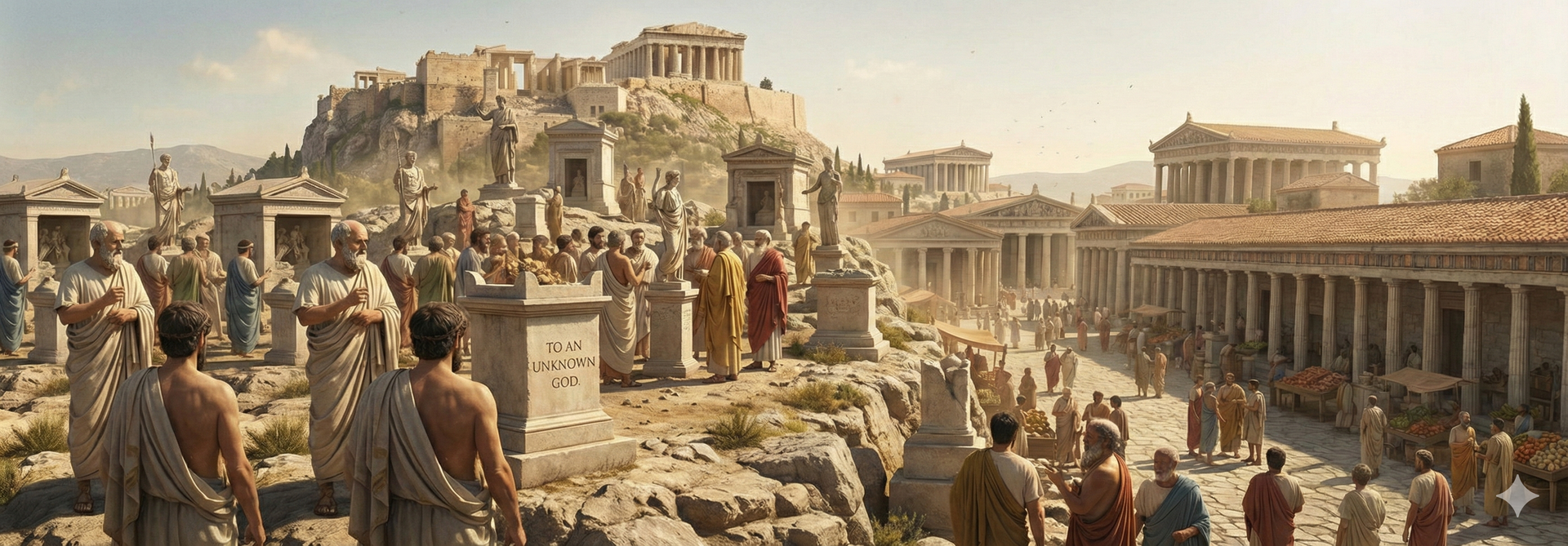
Sally and I stood on Mars Hill in Athens in July 2025, and it made Acts 17 hit me like it never had before.
Mars Hill is a massive rock outcropping that looks out over the city. From there you can see the Acropolis, the Parthenon, and ruins of temples scattered across the skyline. When you read Acts 17 you hear about these things, but standing there in person makes you feel the weight of it.
Everywhere you look you see altars, statues, and reminders of a people reaching for meaning in every direction.
Being there changed the way I read Paul’s words.
I could picture what he saw and I understood, in a new way, why he approached people the way he did. It also helped me see something I had missed for years. Acts 17 is not just about contextualizing the gospel for different audiences. It is also about leadership.
It is about how a leader communicates with different people in different ways without ever changing the truth.
To understand the full picture, you have to follow Paul through the whole chapter, not just Mars Hill.
Paul begins in Thessalonica by building on what people already know
Acts 17:1 to 17:3
Paul starts his journey in Thessalonica. There he goes straight into the synagogue. The people in the synagogue already believed in:
- God
- The authority of the Scriptures
- The promises to Abraham (Genesis 12:1 to 3)
- God’s covenant with David (2 Samuel 7:12 to 13)
- The idea of a coming Messiah
- The prophetic writings
That shared foundation shaped how Paul communicated. Luke says Paul “reasoned with them from the Scriptures” (Acts 17:2). He opened what they already trusted and walked them through the evidence that the Messiah had to suffer, die, and rise again.
Paul likely used passages such as: Psalm 22, Isaiah 53, Micah 5:2, Zechariah 12:10, Psalm 16:10. Daniel 7:13 to 14
Then he pointed to the New Testament fulfillment in the life, death, and resurrection of Jesus.
First Leadership Lesson.
"Start with what people already believe. Honor their
foundation. Lead from common ground."
Paul later moves to Athens where no one shares his foundation, so he begins somewhere else entirely
Acts 17:16 to 34
From Thessalonica, Paul travels through Berea (Acts 17:10 to 17:14) and then eventually down to Athens (Acts 17:15 to 17:16). Athens was nothing like Thessalonica. It was a city full of:
- Epicurean and Stoic philosophers (Acts 17:18)
- Religious idols (Acts 17:16)
- Temples
- Poetry
- Debate
- Intellectual tradition
- Spiritual curiosity
These people did not:
- know Scripture
- believe in one true God
- care about Jewish prophecy
- have any concept of a Messiah
If Paul had started with Isaiah or Moses, he would have lost them immediately. So he did not. He begins
with their world, not his.
He starts with:
- their religious hunger
- their search for meaning
- their own altar “to an unknown god” (Acts 17:23)
- their own poets (Acts 17:28)
- their own assumptions about life
He talks about creation, purpose, and the God who gives life (Acts 17:24 to 17:29). Only after building this bridge does Paul bring them to Jesus and the resurrection (Acts 17:30 to 17:31).
Same truth. Different starting point.
Different approach. Same message.
Second Leadership Lesson.
"Different people require different entry points.
Not different truth, but different beginnings."
Leadership requires understanding the person in front of you before you try to move them
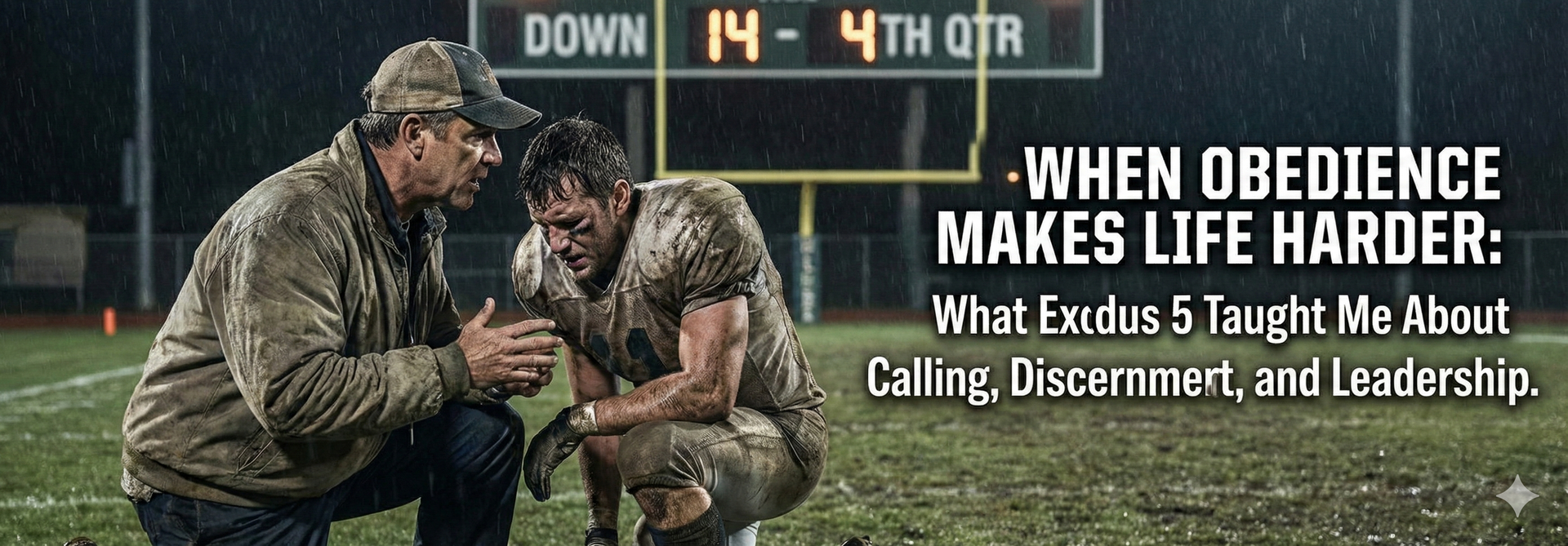
When I served as the Character Coach for Fauquier High School football, I saw this principle up close. That team was full of different stories. Some kids were confident. Some were hurting. Some grew up in church. Some had never heard a word of Scripture in their lives.
They were united on the field, but off the field they came from very different places. If I tried to communicate with them all the same way, I would have lost most of them. I had to learn how to read each kid. What they trusted. What they feared. What they believed about themselves.
Some needed challenge. Some needed encouragement. Some needed someone to show up consistently.
That was the only way to gain influence. That was the only way to serve them well. Paul shows the same discipline in Acts 17. He listens to the room. He respects their starting point. And he adjusts his approach so they can actually hear him.
Influence grows when you build real bridges, not barriers
There was a kid on that Fauquier team who struggled deeply with identity. He had a hard time believing that adults cared about him or that he had any real potential. You could feel the walls he carried around. I knew right away that a one size fits all approach would not reach him.
So, week after week, I tried to meet him where he was. I encouraged him. I listened. I showed up. I tried to help him see the strengths in him that he could not see himself. I wanted him to believe he mattered, because he did. But here is the hard truth.
He never fully let me in. He never really opened up. He never took the hand I extended.
That taught me something important. Paul experienced the same thing on Mars Hill. Some believed (Acts 17:34). Some were curious but not yet convinced (Acts 17:32). And some simply did not accept it (Acts 17:32).
Leadership works the same way.
We build bridges.
We extend a hand.
We plant seeds.
We show up.
But we cannot force the response. We just keep loving and leading faithfully.
Acts 17 gives leaders a simple and repeatable framework
Here is Paul’s leadership model, expressed simply:
- Know who you are talking to.
- Understand their starting point.
- Build the right bridge.
- Present the truth with clarity.
- Trust that different people will respond differently.
Third Leadership Lesson.
"You cannot control whether someone believes, accepts, or changes. You can only control how well you love, serve, and communicate."
The takeaway
Acts 17 is not only a window into the early church. It is a window into wise leadership. Standing on Mars Hill with Sally brought that chapter to life for me in a new way. You can feel what Paul felt. You can see why he spoke the way he did. And it pushes you to slow down, pay attention, and understand the people in front of you before you try to lead them.
Great leaders do not assume. They observe. They listen. They adapt their approach without ever changing the truth. They build bridges instead of barriers.
That is the kind of leadership people can follow. And it starts by meeting people where they are and then helping them take the next step forward.
Go and Grow,
Scot
Are you wondering how you can make difference? Maybe Sports Ministry could be a path for you. Click the links below explore.
Volunteer with Battlefield FCA – Help us disciple the next generation.
Become a Monthly Supporter – Fuel the mission that’s changing lives.
Pray with us – Identity in Christ is spiritual warfare. We need covering.
Help Us Spread the Word and Share!